For Educators
Resources for Educators
Bringing the Pollinator Census to your classroom
The Census is a great S.T.E.A.M. activity you can use in your classroom through a variety of approaches:
- Science — introducing entomology, biology, ecology and botany through our lesson plans and resources below.
- Technology — uploading counts to the website, joining our Facebook group, and sharing on social media.
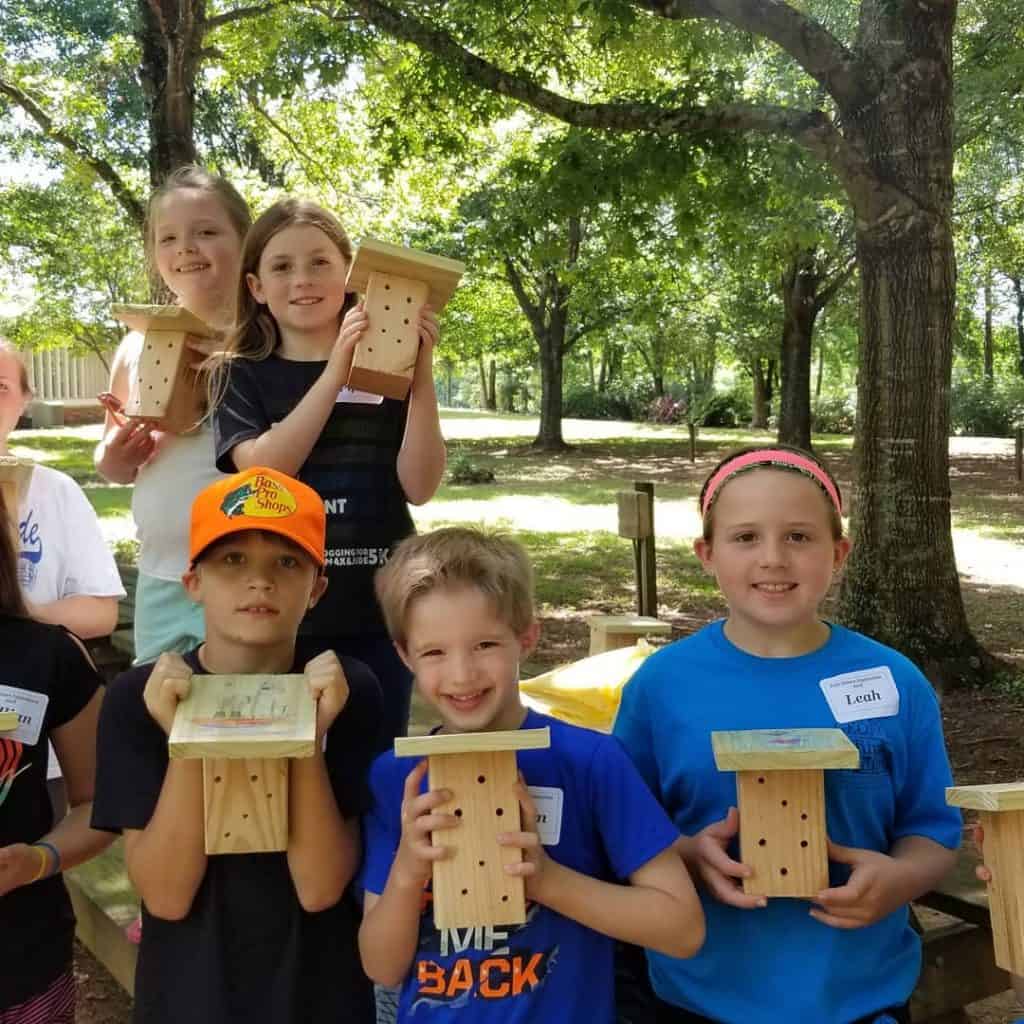
- Engineering — creating bee homes and designing pollinator gardens.
- Art — drawing pollinators and gardens, insect and flower origami, pollinator haiku, and journaling.
- Math — counting down to the census, tallying insects on count day, comparing counts, and graphing what you find.
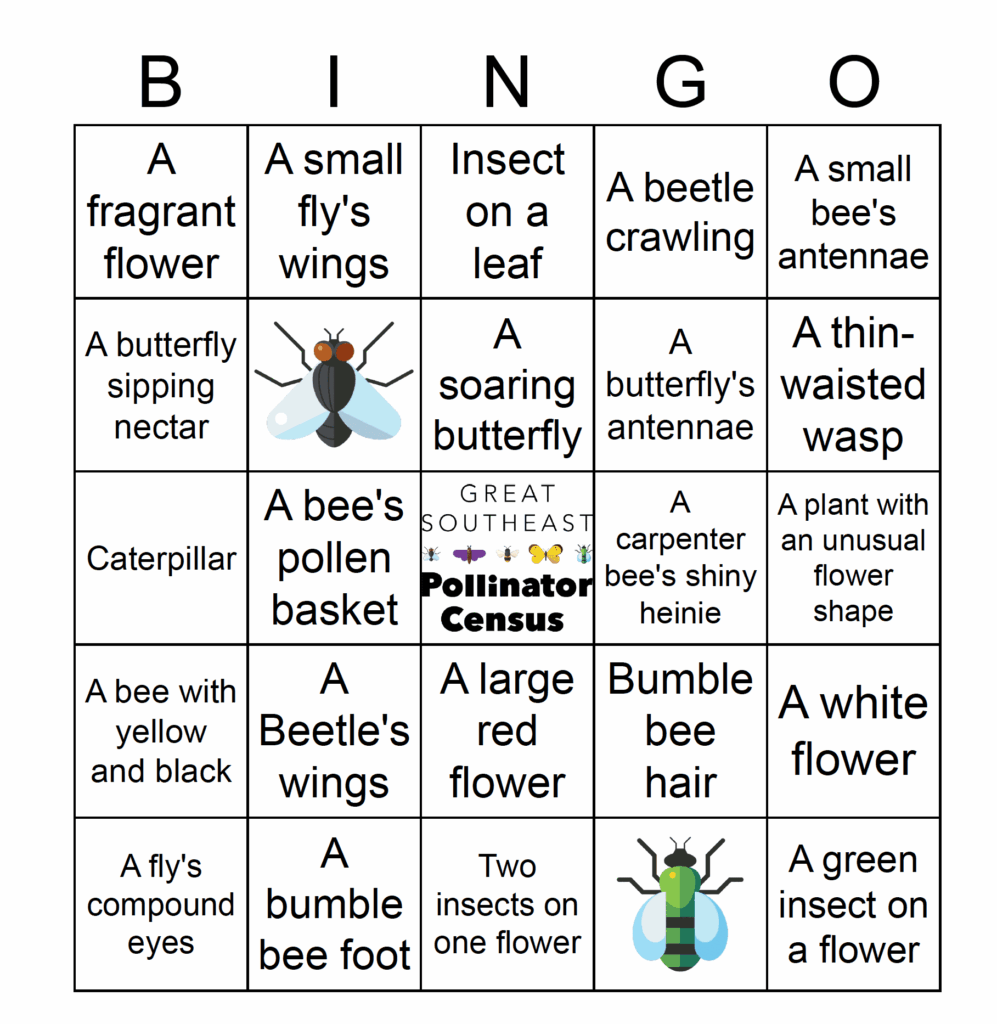
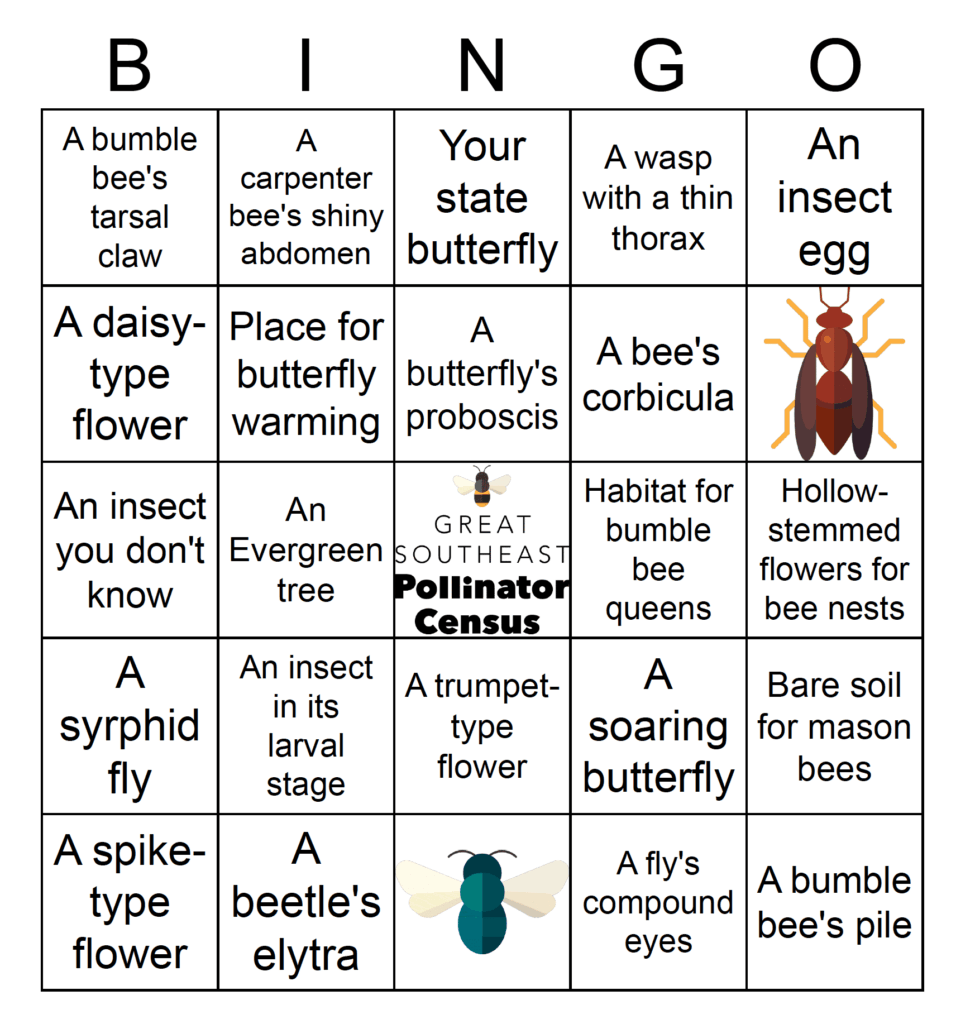
New for 2026: garden hunt BINGO
These two BINGO garden hunt games are a quick addition to any youth (or adult) event. Download the easier cards or the intermediate cards.
Books and journals
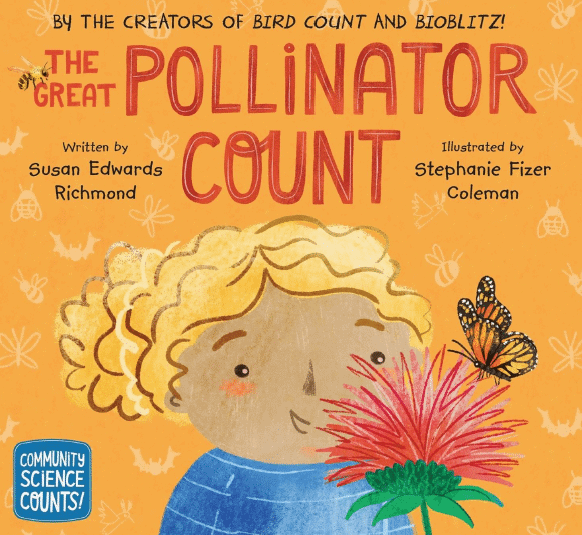
The Great Pollinator Count (published 2025) was inspired by the Great Southeast Pollinator Census. Written by Susan Richmond and illustrated by Stephanie Coleman, it is a great addition to your pollinator curriculum. Learn more about the book.
The Pollinator Journal is a guide to nature journaling for students, campers, or adults — drawing, recording observations, and writing poetry in the pollinator garden. Download it as a Word document or a PDF.
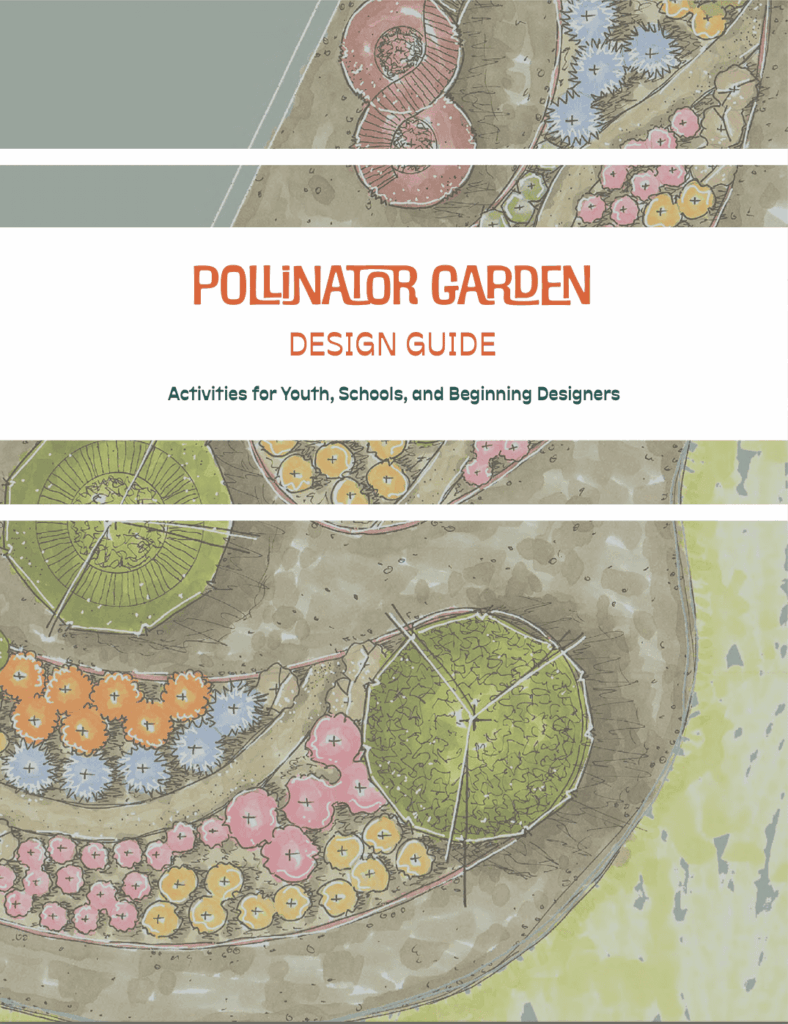
The Pollinator Garden Design Guide by Katherine Melcher helps educators involve students in planning, installing, and maintaining a school garden. Available as a downloadable PDF.
The Pollinators! Friends magazine is an 8-page 4-H publication full of pollinator facts and activities, published through University of Georgia 4-H. Download the PDF.
Pollinator Census lesson plans
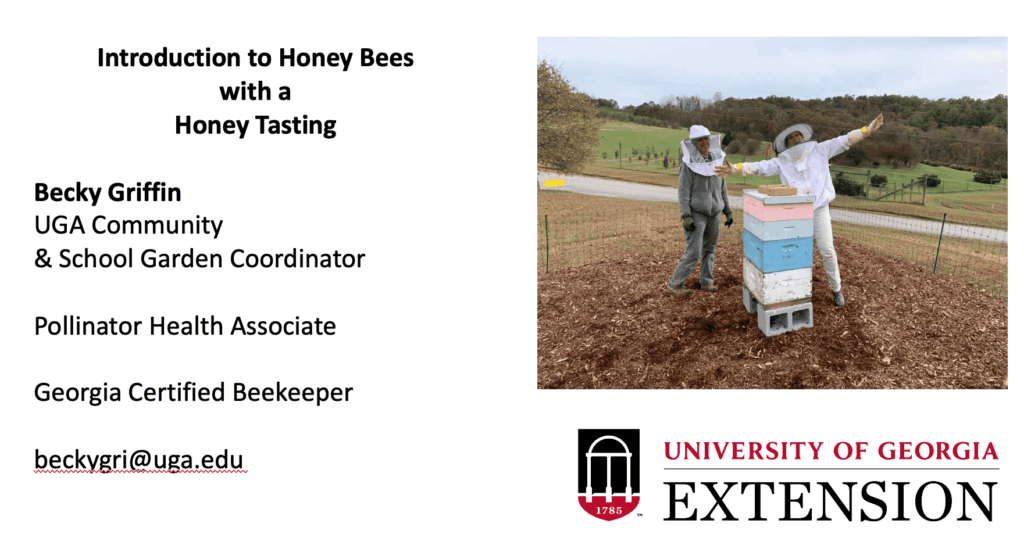
Explore the lessons below for ideas on getting your students excited about insects and the census. Email Becky Griffin (beckygri@uga.edu) with any questions or for additional ideas.
Introducing the Census and Pollinators
Use the Introducing the Census and Pollinators PowerPoint to teach youth (and adults!) about the importance of pollinators, how to identify them, and how to participate. To prepare further, see the Insect Identification Guide and the Counting Worksheet (both available in Spanish on the How to Count page). You may also save any of the insect mascot images for your use.
Scroll down for lessons on insect observation, honey bee roles, honey tasting, math, and language arts.
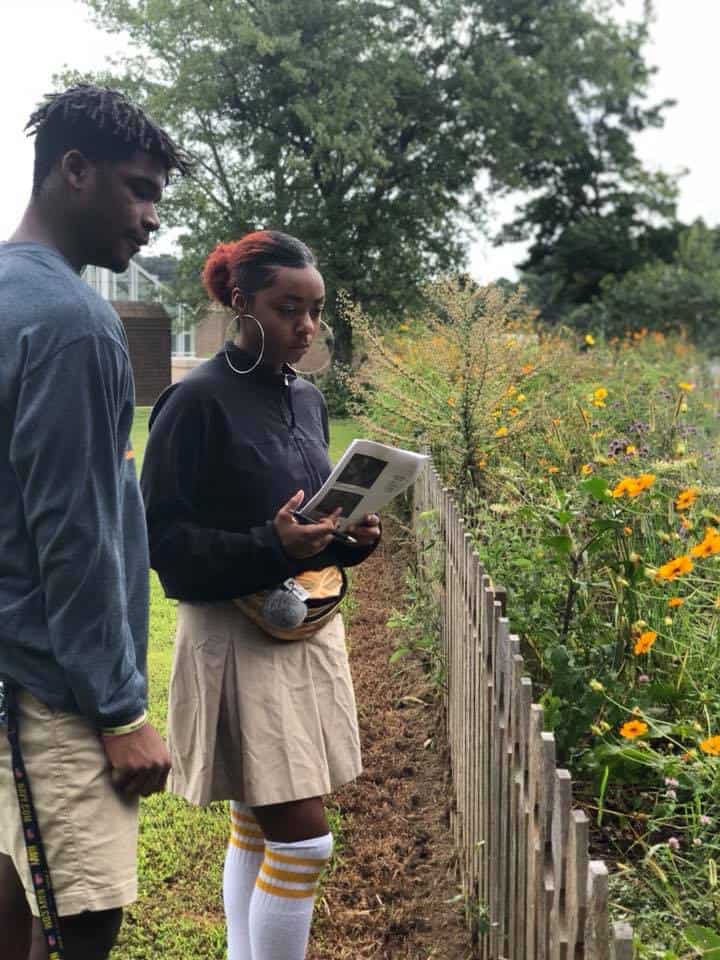
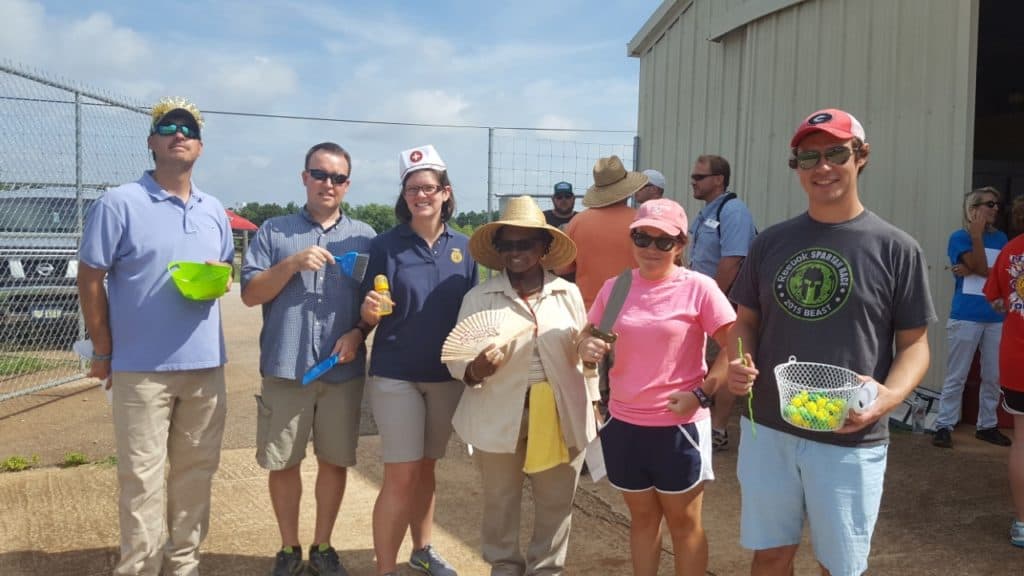
Students at Maynard Jackson High School in Atlanta count insects as part of the census pilot project.
Insect Observation Activity
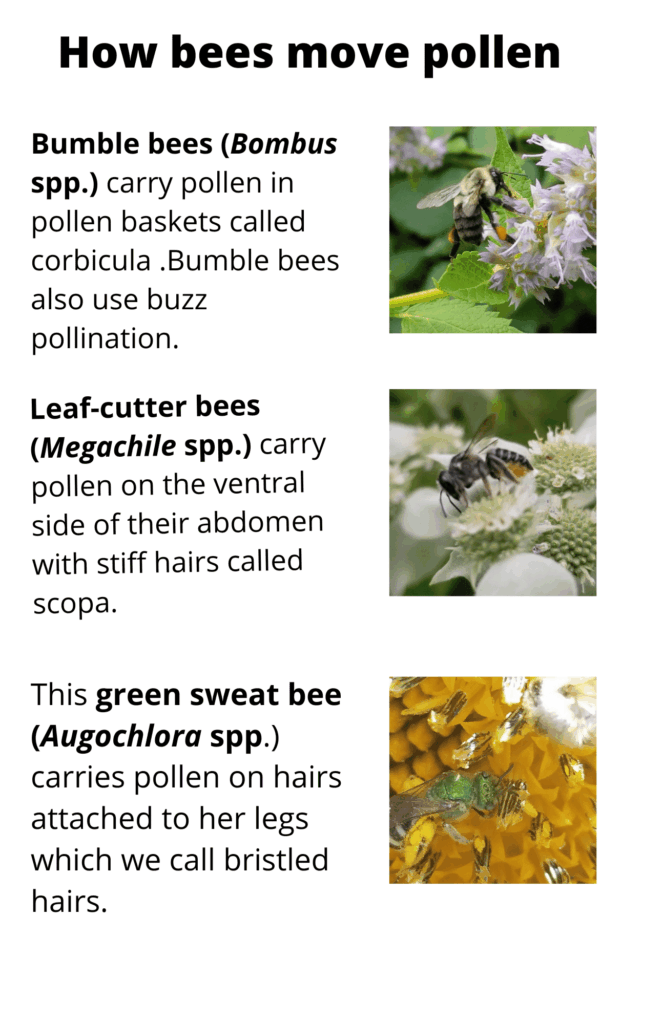
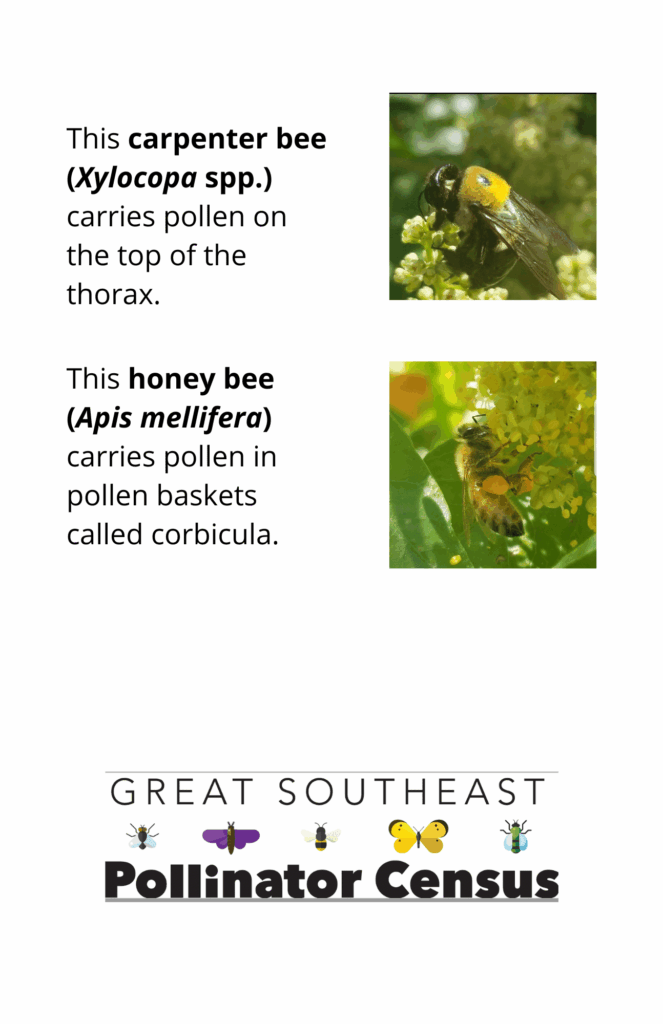
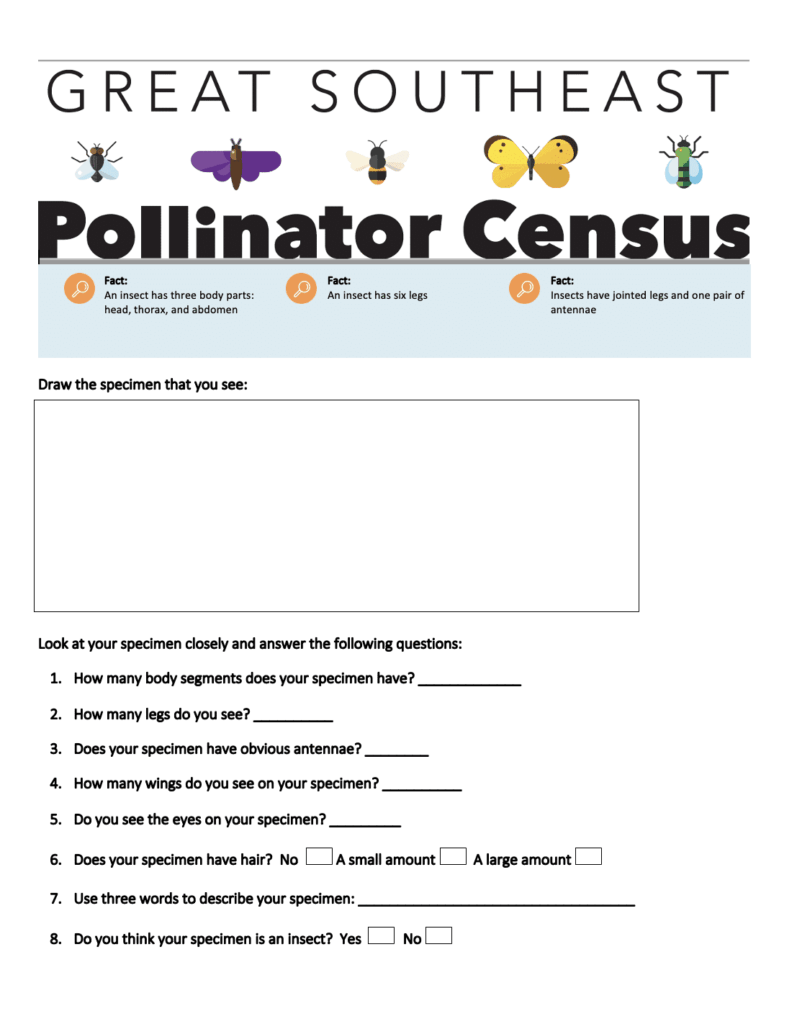
Have students visit their school pollinator garden and watch the insects move around the flowers. If you are comfortable, briefly capture an insect in a jar or tube for observation — do not leave it inside for too long. Use the pollen reference sheets and the insect identification worksheet.
Honey Bee Roles Activity
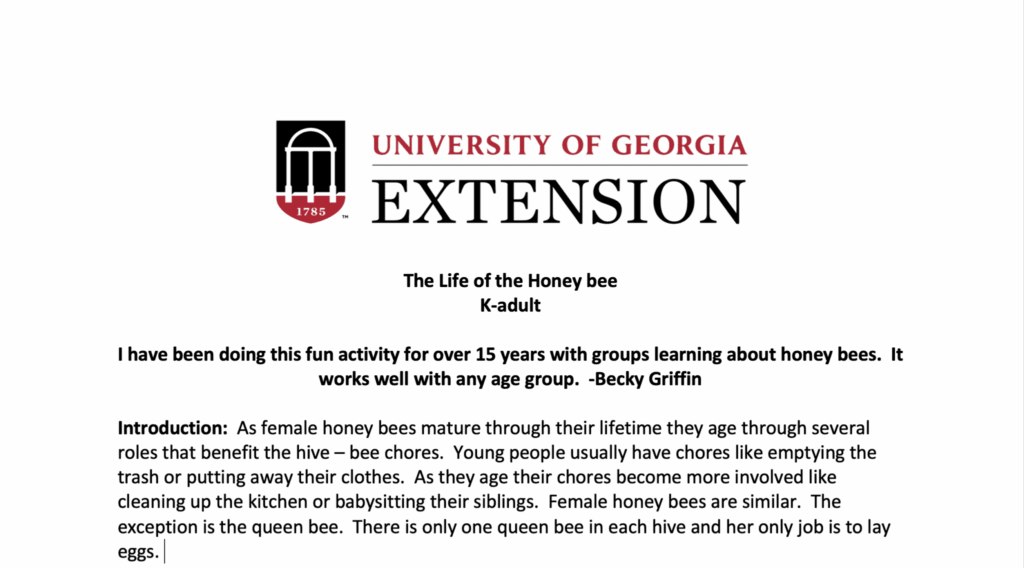
This activity introduces the roles honey bees play within their hive. As bees age, their duties change — just as children take on different chores as they grow. Download the Honey Bee Roles Activity.
Honey Tasting Activity
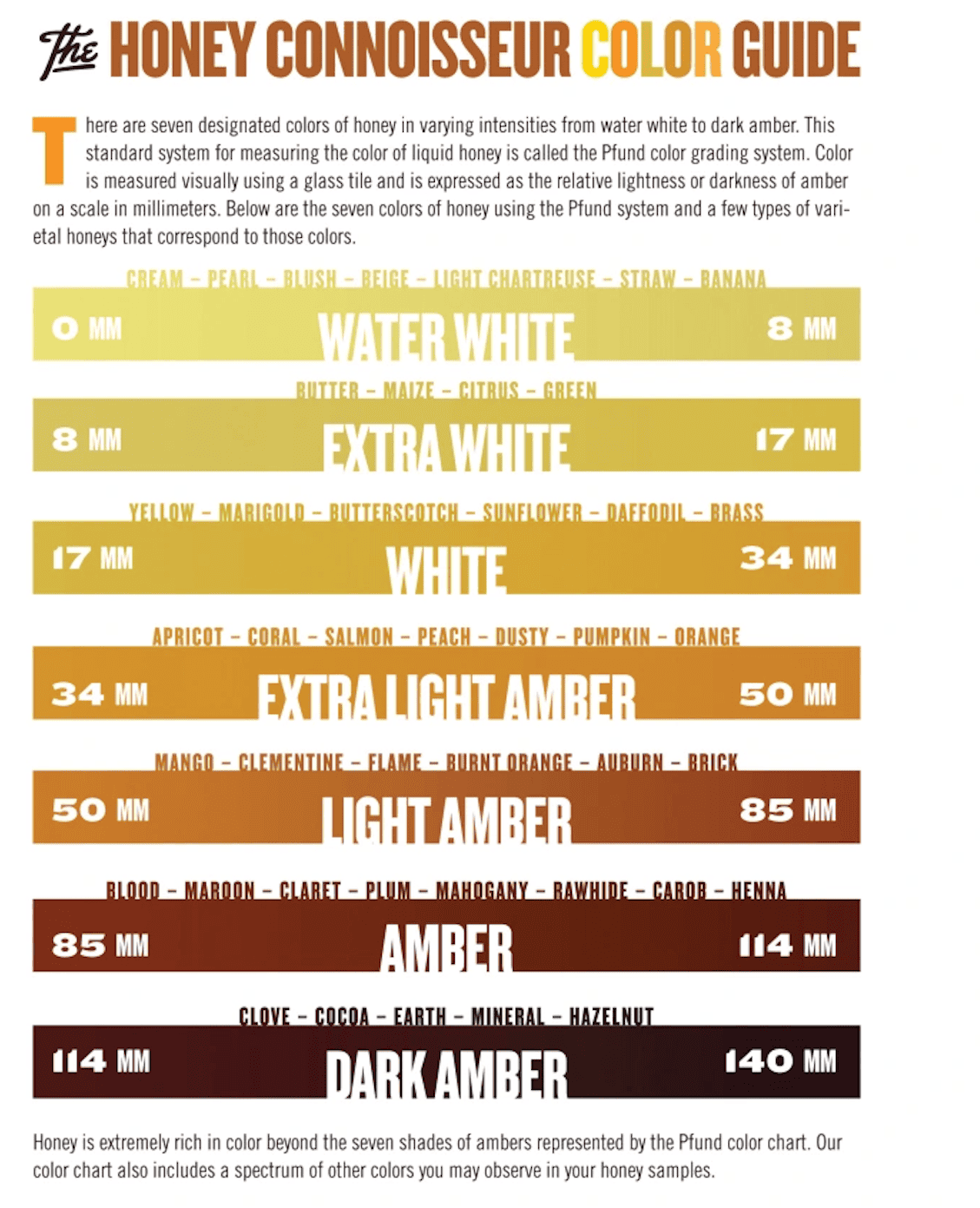
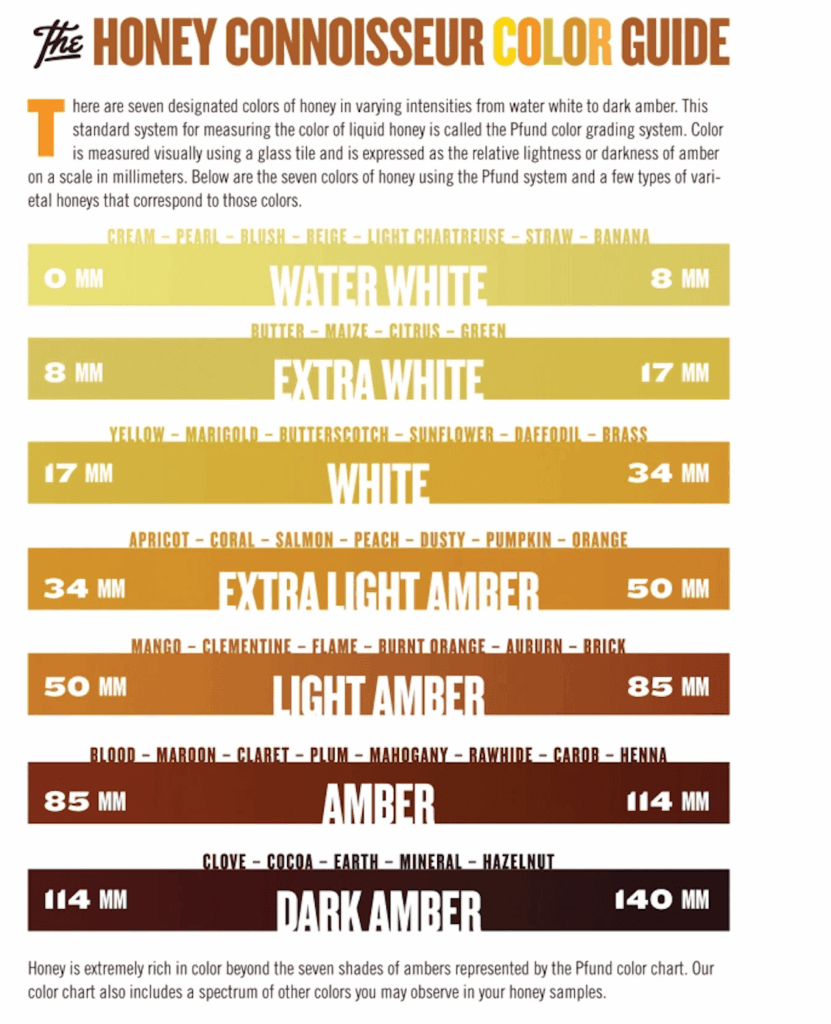
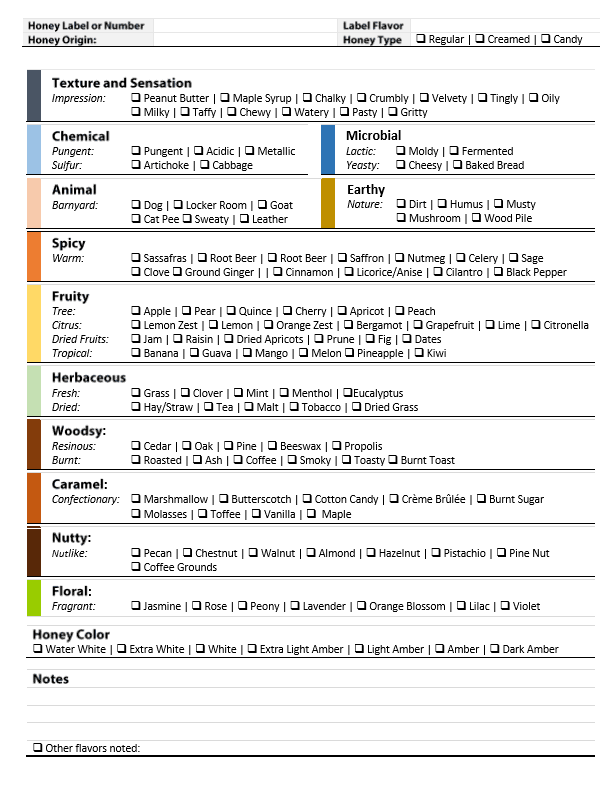
A tasty way to teach students about honey bees. Download the Honey Tasting PowerPoint, the lesson plan, and the activity worksheets: the Honey Connoisseur Color Guide and the Honey Tasting Ranking.
Math Mania Activity
With data from previous censuses, the math lessons create themselves:
- Basic math skills — practice addition, subtraction, multiplication, and division by comparing how many butterflies, honey bees, or wasps were counted.
- Graphing — with eight insect categories and thousands of participants, the data lends itself to graphing and comparing schools, counties, and years.
- Critical thinking — consider how weather conditions or the flowers chosen for counting may influence the counts.
- Two-way frequency tables — download a sample Two-Way Frequency Tables worksheet.
- Statistics — multiple years of data support high-school lessons on topics like significance testing.
Activity Sheets
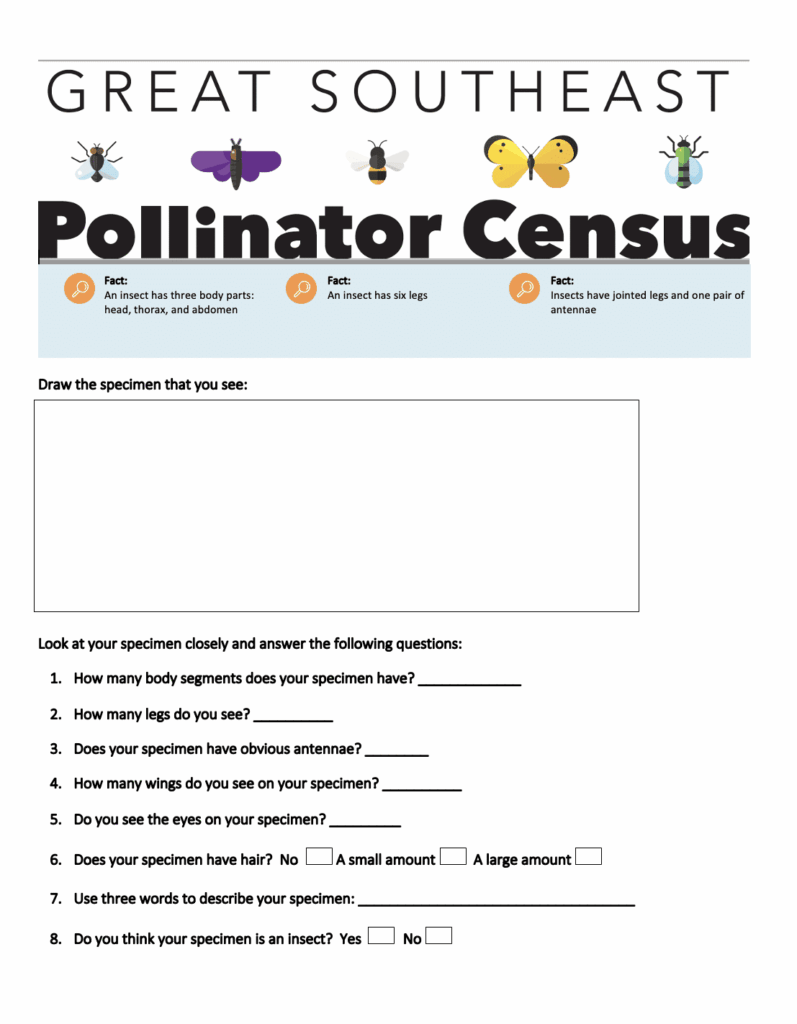
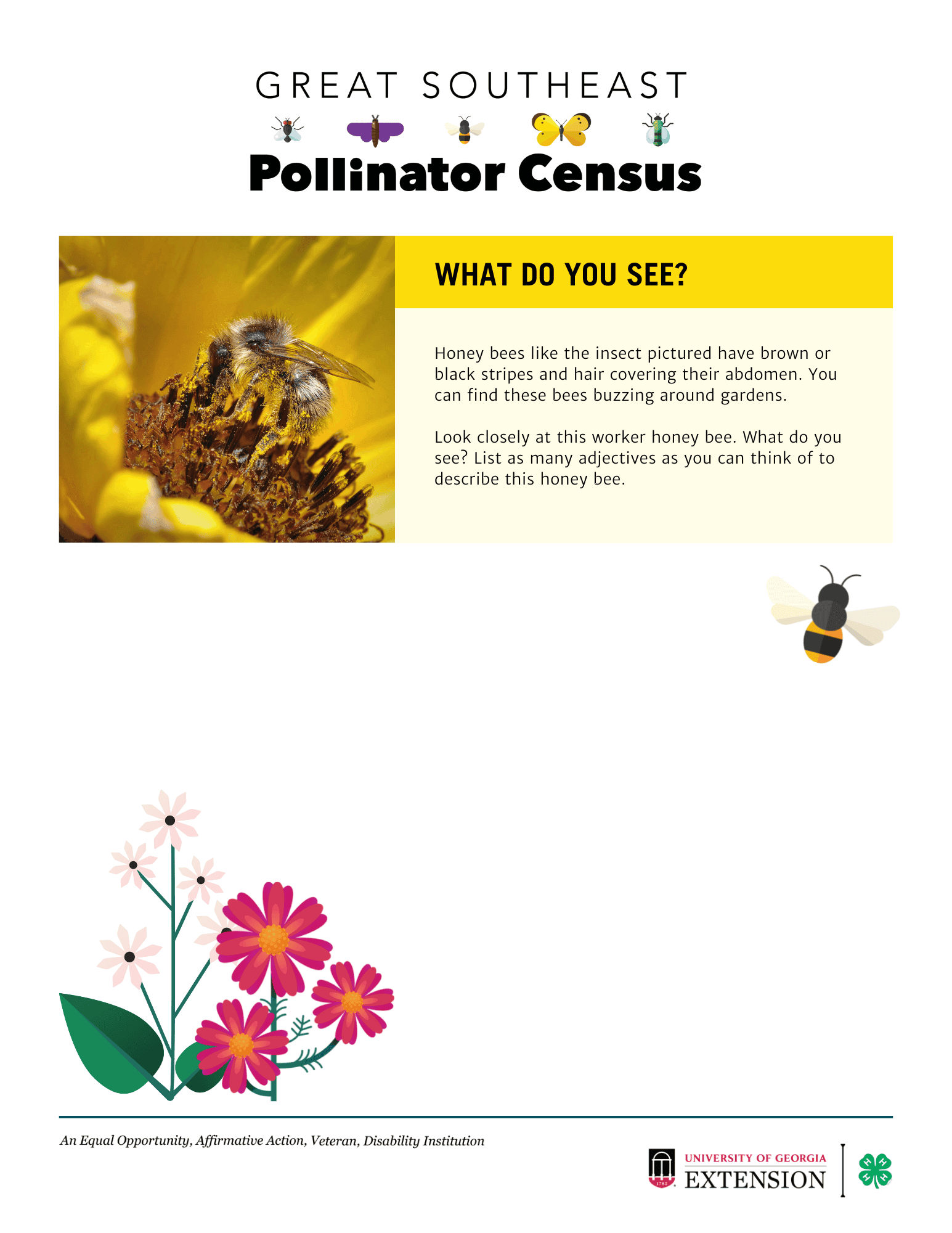
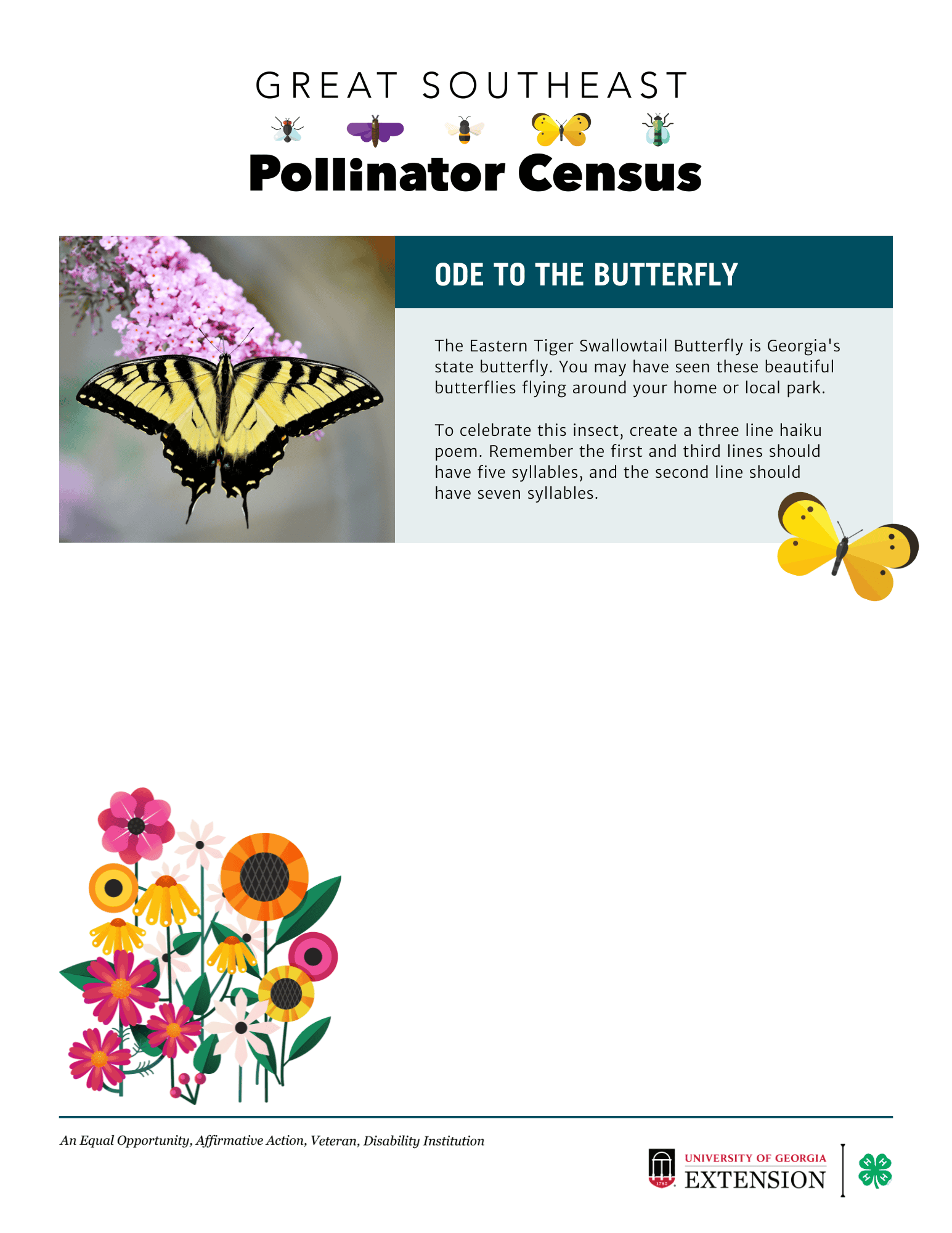
Activity sheets for your classroom or summer camp: the Insect Observation Sheet, the Describing Bees adjective activity, and the Butterfly Haiku poem activity.
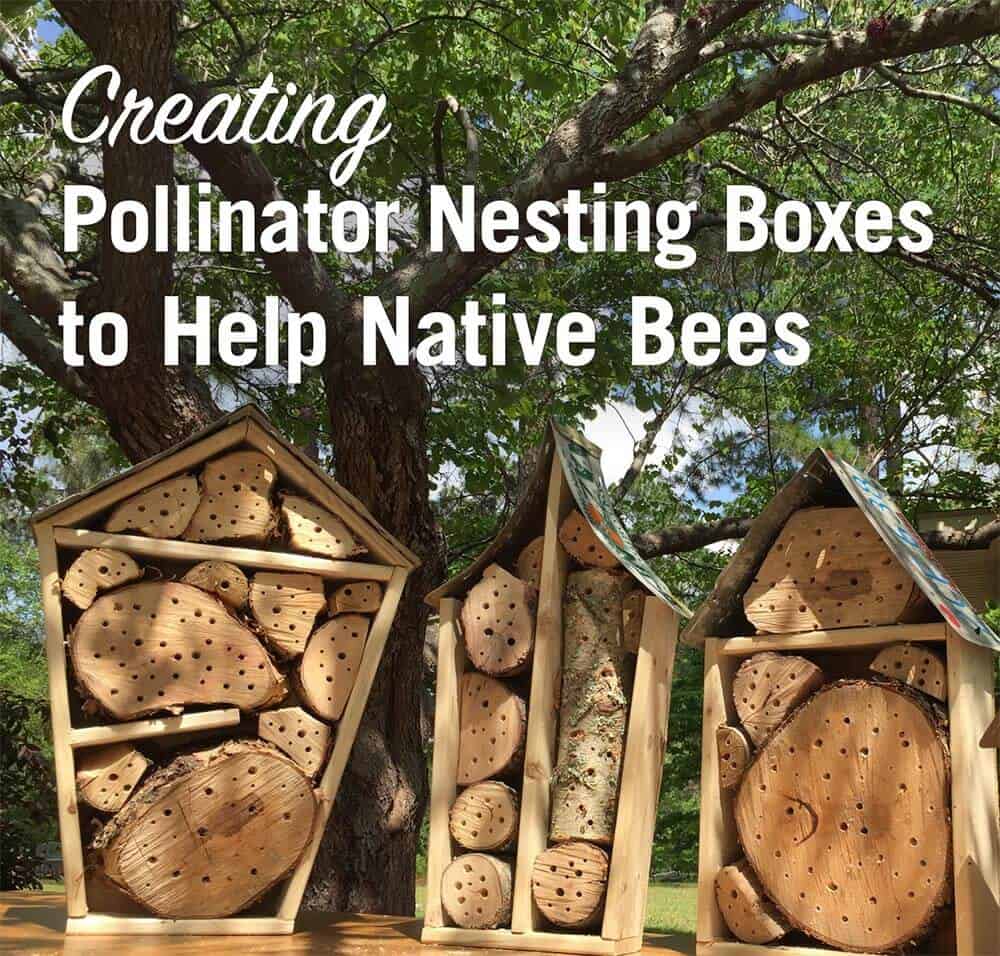
Creating Pollinator Nesting Boxes
This UGA Extension publication on creating pollinator nesting boxes gives simple instructions for building boxes with native bees — especially mason and leaf-cutter bees — in mind, with photos and details on the bees that use them.
More lesson plans from our partners
- The Bee Cause Resource Library
- The State Botanical Garden’s Connect to Protect Coloring Book
- Pollinator Partnership Curriculum
- National Park Service Educator Resources for Pollinators
- Environmental Education in Georgia Lesson Plans
- The Entomological Society of America Lesson Plans and Resources
- Monarchs Across Georgia Resources
- Georgia Association of Conservation Districts Lesson Plans
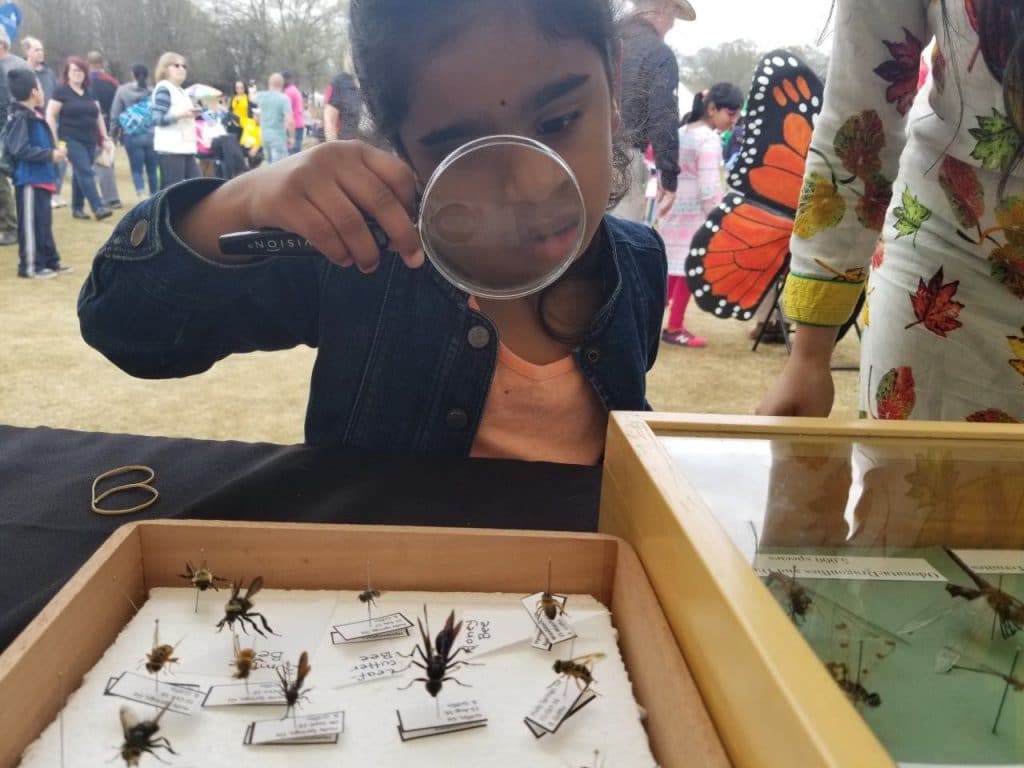
Young people learning about insects at the Atlanta Science Festival.